 CorPhylaxis
Our award-winning science
A new level of precision
for the healing heart.
Our founding research asks a fundamental question: how can we address the biology that worsens heart injury without compromising the repair that keeps the heart intact?
The biological challenge
Preserve the essential scar.
Address the injury beyond it.
Essential structural repair, harmful fibrosis and rupture risk explain why cellular specificity matters.
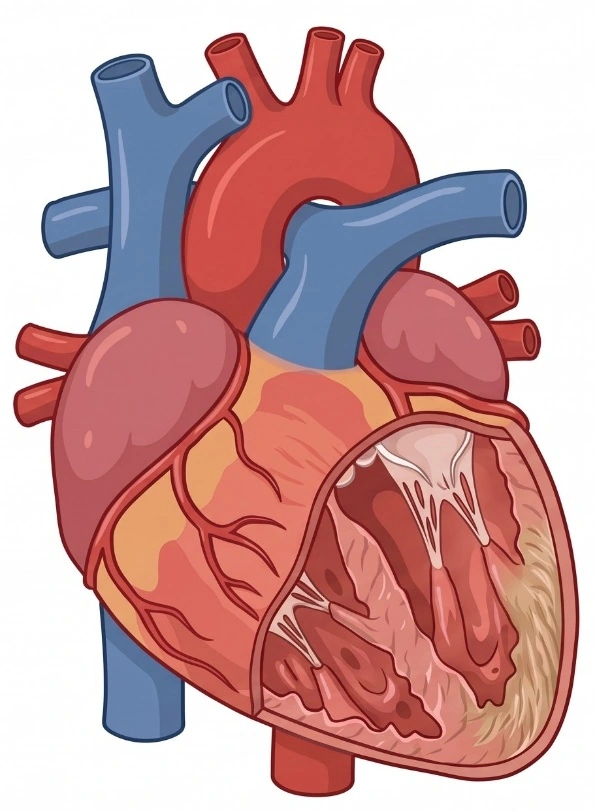
Repair that protects.
A structural scar replaces lost muscle and helps keep the ventricular wall intact.
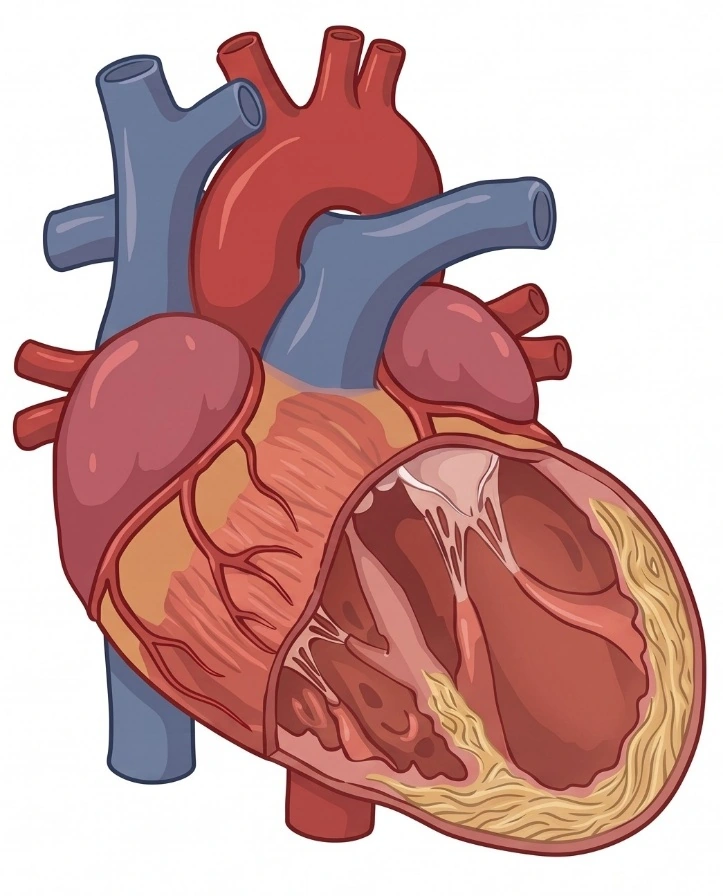
Fibrosis that harms.
Excessive fibrosis can extend into surviving muscle, contributing to adverse remodeling and heart failure.
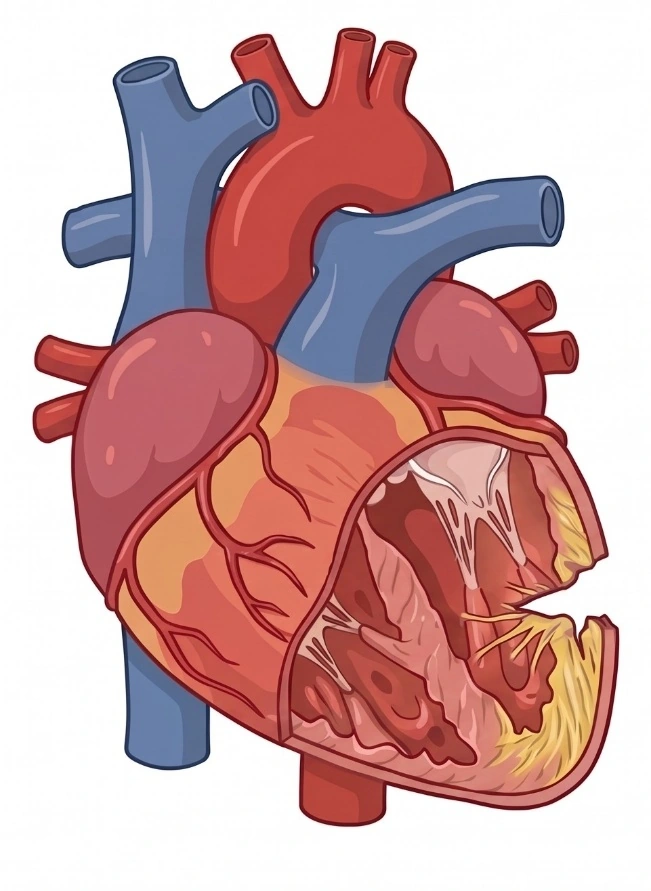
When repair fails.
Disrupting essential repair can weaken the wall and cause catastrophic cardiac rupture.
Contrasting outcomes after myocardial infarction. Rupture risk from impaired repair is demonstrated in experimental models.
The discovery
Different cells.
Different consequences.
Following myocardial infarction, scar formation provides essential structural support. Excessive or persistent remodeling can also damage surviving tissue and contribute to heart failure.
Broad intervention risks disrupting both processes. Experimental studies show that compromising repair can weaken the ventricular wall and lead to cardiac rupture.
Using our human heart data engine, we identified distinct cell subpopulations with opposing roles: some exacerbate injury, while others protect the healing heart.
Our therapeutic philosophy follows from that discovery: understand the cellular context, selectively address the disease-driving biology, and preserve protective repair.
Awards and selections
Recognized by the
cardiovascular community.

Innovative Project Award
American Heart Association
Competitive research support for the founding science.

Louis N. and Arnold M. Katz Basic Science Research Prize — Top 5
American Heart Association · Scientific Sessions 2025
Selected among the Top 5 to present discoveries in cardiovascular basic science. View the AHA program.
Top 5 Ventures
AHA Innovation Forum
Selected to present as one of five ventures.
Top 15 ventures
Deerfield & Cure · MEHA II
Selected for the healthcare venture program.
NIH Catalyze grant finalist
National Heart, Lung, and Blood Institute
Two projects reached the finalist stage, as reported in the company’s November 2026 materials. Finalist status is not a grant award.
Selected publications
Built on a published
scientific record.
Founder-authored work spanning post-infarction remodeling, cardiac repair and spatial biology.
- CirculationAcceptedResearch highlight
Cell-state-specific protection in the remodeling infarcted heart
Manuscript accepted · related abstract published November 2025
An accepted manuscript on the cellular programs that protect the healing heart. Related work was presented in a published 2025 Circulation abstract.
Authors of the published abstractRead the 2025 abstract
- Cardiovascular Research2026Research highlight
Macrophage biology, angiogenesis and post-infarction remodeling
Published online · 6 October 2026
Experimental work examining how macrophage signaling connects vascular repair, extracellular-matrix remodeling and cardiac function after infarction.
AuthorsRead publication
- Frontiers in Cell and Developmental Biology2026
Decoding cardiac homeostasis and injury: the evolving landscape of spatial transcriptomics
A perspective on how spatial biology helps resolve the cellular environments of cardiac injury and repair.
AuthorsRead publication
- Journal of Molecular and Cellular Cardiology2024
Macrophages in the infarcted heart acquire a fibrogenic phenotype, expressing matricellular proteins, but do not undergo fibroblast conversion
Research examining cellular identity and matrix-related function in the healing heart.
AuthorsRead publication
- Circulation2023
Cardiac pericytes acquire a fibrogenic phenotype and contribute to vascular maturation after myocardial infarction
A study of the relationship between cardiac mural cells, tissue remodeling and vascular maturation after injury.
AuthorsRead publication
- Matrix Biology2021
Collagen denaturation in the infarcted myocardium involves temporally distinct effects of MT1-MMP-dependent proteolysis and mechanical tension
First-authored research investigating how collagen remodeling changes across the inflammatory, proliferative and maturation phases of infarct healing.
AuthorsRead publication
- AJP–Heart and Circulatory Physiology2020
Validation of diagnostic criteria and histopathological characterization of cardiac rupture in the mouse model of nonreperfused myocardial infarction
First-authored work on structural integrity and the experimental assessment of cardiac rupture.
AuthorsRead publication


These publications provide scientific context. They do not establish the clinical efficacy of a CorPhylaxis therapy.
Turn a deeper understanding into a shared research direction.
Explore how our scientific approach could inform your next cardiovascular discovery or development program.