01 / THE BIOLOGY OF A BETTER OUTCOME
A heart worth protecting.
The heart is the hardest-working muscle in the body.
The healthy heart
 Katz AwardAmerican Heart AssociationInnovative Project AwardAmerican Heart Association
 Top 15 ventureCure MEHA II
To change the course of heart failure, we must understand the boundary between essential repair and progressive damage.
The heart is the hardest-working muscle in the body.
The healthy heartThe heart is the hardest-working muscle in the body.
After a heart attack, injured muscle is replaced by a collagen-rich scar: an essential structural patch that helps keep the ventricular wall intact.
Fibrosis can extend beyond the original injury into surviving myocardium, disrupting healthy tissue as the ventricle dilates and its contraction weakens.
Suppressing fibrosis indiscriminately can compromise the protective scar as well as harmful expansion, creating a risk of ventricular wall rupture.
Our award-winning discovery identifies spatially distinct fibroblast subpopulations: reparative cells within the scar and invasive cells at its edge.
Our therapeutic strategy is designed to arrest harmful fibroblast invasion while leaving reparative cells and their protective collagen scaffold intact.
Human genetic evidence and experimental models inform our selection of targets at the scar border.
Company analyses associate higher genetically predicted expression of a lead target with adverse cardiovascular outcomes.
Odds ratio per 1-SD higher genetically predicted expression; 1.00 indicates no association.
In a mouse model of myocardial infarction, loss of Target 2 worsens cardiac function.
Ejection fraction (%) at 28 days post-infarction.
Our ambition: a first-in-class precision therapy for heart failure that acts only in harmful invasive fibroblasts.
Cardiac-homing lipid chemistry and a fibroblast-targeting antibody are designed to bring the lipid nanoparticle to the heart’s fibroblast compartment.
A synthetic promoter is designed to recognize the transcriptional program of invasive fibroblasts and activate the payload within those cells.
Payload designed to remain dormant.
Protective scar preserved.
Payload designed to activate.
Harmful invasion arrested.
Platform design and intended selectivity are under development and require further preclinical validation.
Designed to arrest fibrosis expansion into healthy heart regions without disrupting the essential scar.
| Program | Modality | Intended therapeutic effect | Stage |
|---|---|---|---|
| CPX-001 | LNP–SynPro genetic expression Degradation-resistant protective regulator | Reprogram invasive fibroblasts to repress fibrosis in viable myocardium surrounding the scar. | Preclinical validation |
| CPX-002 | LNP–SynPro RNA interference Targeted inhibition of a motility driver | Suppress fibroblast motility and halt invasion into viable tissue beyond the injury border. | 3D culture proof of concept |
| CPX-003 | Platform expansion Adapted synthetic promoter | Extend the dual-key approach to disease-driving fibroblast subsets in pulmonary fibrosis. | Target discovery |
Program stages reflect the company development plan. Specific payload identities remain undisclosed; none of these candidates is approved for clinical use.
The goal is to uncouple harmful scar expansion from essential repair, combining cell-subpopulation precision with preservation of scar integrity.
Proprietary biology. A distinct approach.| Therapeutic objective | Stem cell therapies | Cardiomyocyte proliferation | Angiogenesis | CorPhylaxis |
|---|---|---|---|---|
| Arrest fibrotic tissue damage | ✕ | ✕ | ✕ | ✓ |
| Prevent border-zone fibrosis expansion | ✕ | ✕ | ✕ | ✓ |
| Preserve the protective core scar | ✕ | ✕ | ✕ | ✓ |
| Support lasting structural protection | ○ | ○ | ○ | ✓ |
Conceptual company positioning; not a head-to-head clinical comparison or evidence of proven superiority. Standard-of-care therapies have established clinical benefits; this investigational approach is not a replacement.
A dual-key precision platform: arrest the invasive fibroblast population while preserving reparative cells — first in post-infarction heart failure, then across fibrotic disease.
Explore a partnershipAdvance CPX-001 and CPX-002 through IND-enabling studies and into early clinical trials for post-infarction heart failure, with the aim of retaining global commercial rights.
Pursue strategic partnerships for non-core indications — including pulmonary and hepatic fibrosis — to extend the platform beyond the heart.
We are raising a $2M post-money SAFE to advance the dual-key genetic medicine platform toward IND-enabling studies and early development.
Cell-state-specific gene sequences, motif arrangements, and logic-gated architectures.
Cardiac-homing lipid chemistry and fibroblast-targeting surface modifications.
A planned strategy covering delivery approaches and drivers of invasive myofibroblasts.
Preventing border-zone fibrosis expansion through selective targeting.
Company IP strategy; issued patent coverage and freedom to operate are not represented as established.
A focused entry population: heart attack survivors at high risk of progressing to heart failure.
781,600 annual surviving myocardial infarction patients × $75,000 per prophylactic course.
195,400 high-risk survivors, representing the estimated 25% subgroup.
18% penetration of the target market, or approximately 35,170 treated patients.
An estimated development plan from formulation selection to large-animal proof of concept and Series A readiness.
Screen LNP formulations, establish assays, verify in vitro selectivity, and define the IP and filing plan.
Assess biodistribution, target engagement, dose range, tolerability, and manufacturing stability.
Evaluate efficacy, heart function, and scar integrity; align the regulatory strategy.
Complete delivery and efficacy studies, prepare the data package, and pursue Series A financing.
Milestones are targets, measured from funding and subject to experimental results. Post-Series A priorities: IND-enabling toxicology, GMP clinical supply, IND submission, and Phase 1 entry.
A post-money SAFE financing to translate validated biological targets into precision genetic medicines.
Discuss the opportunityPlanned allocation; subject to development needs and financing terms.
Cardiovascular discovery meets expertise in spatial biology and the operations that turn research into progress.
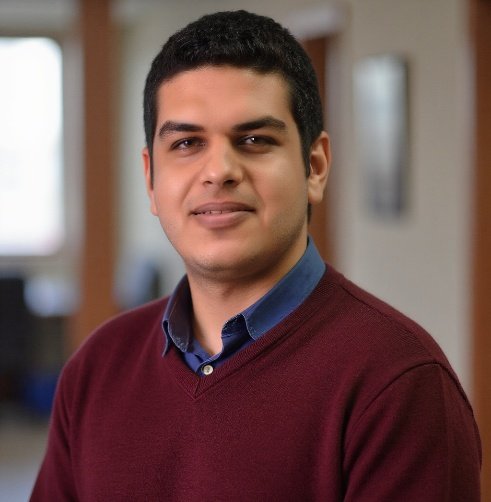
Cardiovascular medicine, computational biology, and award-winning research in post-infarction heart failure.

Single-cell and spatial biology target discovery, with deep experience managing and scaling genomics laboratories.
We are happy to discuss. Let’s move the science forward, together.